Last updated 2026-08-18
TL;DR
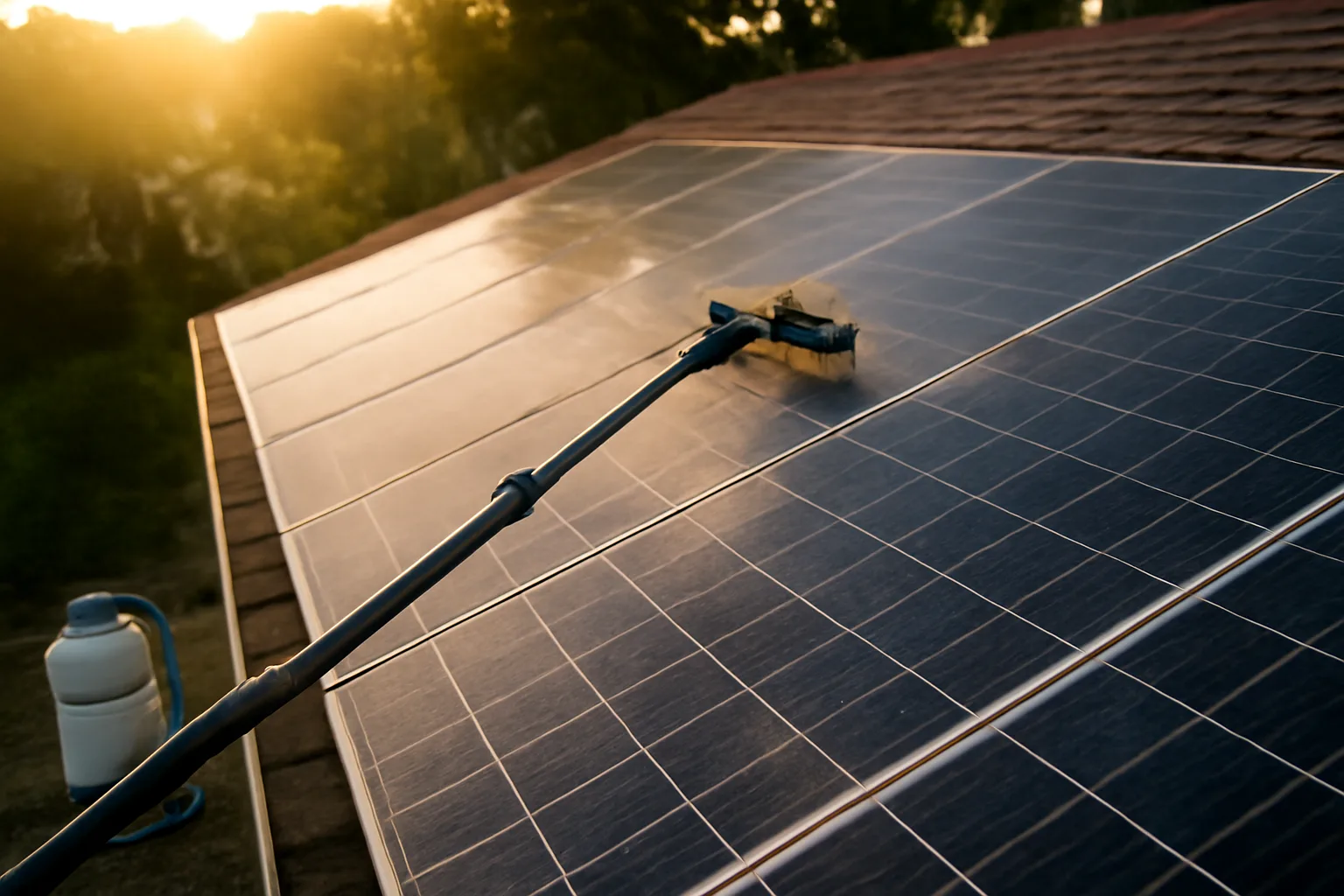
In Florida you do not need a contractor license to clean solar panels if you use only water and a soft brush or cloth, and you leave the panels in place. That exemption lives in Florida Statute 489.103(6). A typical residential clean costs $150 to $250 and takes 1 to 2 hours. No "solar panel cleaning board" exists. The Construction Industry Licensing Board runs the underlying contractor rules.
Do you need a license for solar panel cleaning in Florida?
No. You do not need a state contractor license to clean solar panels in Florida, as long as you stay inside one narrow exemption in the contractor licensing statute.
Florida Statute 489.103 lists the work that is exempt from contractor licensing. Water-only panel cleaning, done with a soft brush or cloth and no chemicals, sits outside the definition of the contracting work the state regulates. [1]
The wording is the whole game. Add soap, run a pressure washer, or reach for any chemical (even a mild detergent), and you step outside the exemption. Now you're doing work that could fall under a Certified Solar Contractor license, a general contractor license, or a specialty credential the Construction Industry Licensing Board (CILB) treats as structural or electrical. Nobody wants that for a bucket of suds.
Stick to deionized water and a soft brush on a pole. There's no license to get, no exam to take, no fee to send the state. You can start cleaning panels tomorrow morning.
What Florida's contractor board actually says about solar panel cleaning
There is no single "solar panel cleaning board" in Florida. The closest agency is the Construction Industry Licensing Board (CILB) under the Department of Business and Professional Regulation (DBPR). The CILB doesn't issue a cleaning-specific credential. It licenses the contractors who build, install, or alter solar systems. [7]
Routine washing, done exactly as the statute allows, sits outside their world. The board doesn't meet about it, publish FAQ sheets for cleaners, or keep a roster. The exemption does that work. The CILB steps in only when someone goes past the exemption, say, by pulling panels off to clean underneath or brushing on a coating. That triggers the need for a Certified Solar Contractor license under Florida Statute 489.113, which covers installing, altering, repairing, or maintaining solar energy systems. [10]
What this means in practice: you will never sit across from a board for a normal wash. Your authority comes straight from the statute.
How much does solar panel cleaning cost in Florida?
A typical Florida residential clean runs $150 to $250. Single-story homes on flat terrain with 20 to 30 panels land closer to $120 to $175. Steep two-story roofs with awkward access push past $225.
Nationally, HomeAdvisor puts the average panel-cleaning job at $152, with most homeowners spending between $105 and $207. [2] Florida fits inside that band, then bends with local roof conditions.
A few things move Florida pricing:
- Roof slope and height matter more than system size.
- Coastal homes collect salt spray and eat more time. Many cleaners charge a flat visit fee plus a per-panel adder.
- Subscription plans run $25 to $40 per visit for quarterly service.
- DIY with a rented pole and DI tank still costs about $50 to $75 in supplies.
The Florida market is crowded enough that you'll see quotes dipping below $100 for a basic flat-roof wash. Confirm what's included every time: a rinse-only pass, or a full brush pass with DI water.
How long does solar panel cleaning take in Florida?
A residential job usually takes 1 to 2 hours, truck to finish. SolarReviews says it plainly: "A typical residential solar panel cleaning takes a professional 1 to 2 hours, depending on the size and accessibility of the system." [3]
Here's the breakdown on a 25-panel array:
- Setup (tank, hose, pole, safety check): 10 to 15 minutes
- Brushing and rinsing each panel with a water-fed pole: 30 to 45 minutes
- Final inspection and pack-up: 10 minutes
- Drive to the next job: not on the cleaning clock, but it eats your day
Big commercial rooftop jobs (200+ panels) run 4 to 6 hours. Florida's afternoon storms interrupt outdoor work, so smart operators book mornings. A plain hose-brush-ground approach adds about an hour. A water-fed pole cuts a lot of ladder time.
What equipment keeps you exempt and effective
The exemption hangs on water-only cleaning, so your kit matters. Here's what working Florida cleaners actually run:
- Water-fed pole (18 to 30 feet, telescoping) with a soft bristle brush head. The brush is the only thing that touches the panel.
- Deionized (DI) water tank. Tap water spots. DI water dries clean and skips the mineral film that makes panels look dirty again fast.
- A low-pressure rinse. No pressure washers.
- Fall protection if you go on the roof. A roof anchor, harness, and rope are cheap insurance.
The SolarWashPath $149 DI Water + Roof-Safety Kit bundles a water-fed pole, DI tank, brush, and a basic harness. It's built around the water-only rule, so you get a one-purchase start with no license tangles.
Anything that reads like a chemical, even car-wash soap, breaks the exemption. Keep a printed copy of the statute in the truck for an overzealous code officer.
What insurance do you need before your first solar cleaning job?
The state exemption doesn't require insurance, but going in bare is a bad bet. One slip off a roof or one cracked panel can wipe out a year of revenue. Most Florida solar cleaning businesses carry three things.
General liability insurance, usually $1 million minimum. It covers property damage to panels or roofs and bodily injury to people. Some HOAs and commercial clients want a certificate before you set foot on site.
Workers' compensation if you have employees. Sole proprietors with no employees can file for an exemption from workers' comp coverage in Florida through the Division of Workers' Compensation. [4] The exemption is free, but you have to file it.
Commercial auto insurance if you run a branded vehicle.
What's it cost? A basic general liability policy for a one-person outfit starts around $500 to $900 per year. Get quotes from at least three insurers before you trust that number.
Which local Florida city rules can trip you up?
The state exemption waives the contractor license, but most Florida cities and counties still want a local business tax receipt (once called an occupational license) for any commercial activity. This isn't a solar cleaning rule. It's a general business rule that applies to almost everybody. [5]
A few examples:
- Miami-Dade County issues a Local Business Tax Receipt. The cost varies by business type and is often under $100 per year. [5]
- Orlando and Tampa also want a business tax receipt before you collect a dollar inside city limits.
- Some small municipalities have nothing. You still check each city where you plan to work.
Call the local tax collector or business tax division and ask straight: "Do I need a business tax receipt to offer solar panel cleaning within city limits?" Get the answer in writing or save the page. Cross county lines and you may need more than one receipt. There's no statewide BTR, and local governments administer these permits. [8]
How do you start a solar panel cleaning business in Florida?
Less paperwork than most people expect. Here's the real path built on the exemption.
1. Get your equipment. Water-fed pole, DI tank, safety gear. All of it has to fit the water-only, soft-brush, no-chemical rule. 2. Form a business entity. A Florida LLC costs $125 to file through Sunbiz and gives you a layer of personal liability protection. 3. Get general liability insurance. Even a basic policy shields you from panel-damage claims. 4. File a workers' comp exemption if you're solo, or buy coverage if you have crew. 5. Check the business tax receipt rules in every city you'll serve. Budget $30 to $150 per locality. 6. Set pricing and go. No state test, no board interview, no license number to hang on the wall. Plenty of cleaners build a route inside a month.
The SolarWashPath $149 kit clears step one fast. It comes with gear that fits the statutory exemption, so you're not guessing about chemical crossovers.
Hold off on panel removal or seal-coating until you carry the right contractor license. That road wants a Certified Solar Contractor or general contractor credential, which means years of experience or a two-part exam, plus insurance and bonding. Different sport.
What happens if you step outside the exemption?
Use soap, spray a chemical and squeegee it, or unbolt a panel to clean underneath, and you've left the safe harbor. The DBPR can cite you for unlicensed contracting. Fines start in the low thousands and can climb to a cease-and-desist order. Repeat offenses bring criminal charges.
To legally do anything past the exemption, you'd need a Certified Solar Contractor license. That scope covers installing, altering, repairing, or maintaining solar panels. [10] To earn it, you pass a two-part exam, show four years of experience (or an approved mix of education and experience), and prove financial responsibility. That's a construction-trade pathway, not a cleaning one.
Staying inside the lines is simple: water only, soft brush only, no removal. The minute you offer to take panels off to clean under the array, you're contracting without a license. Don't do it.
How often should solar panels be cleaned in Florida?
Plan on a quarterly rhythm, then adjust for your site. Florida's humidity, dust, pollen, and daily rain create their own soiling pattern: pollen in spring, dirt in dry spells, salt spray near the coast. The Florida Solar Energy Center recommends periodic inspection and cleaning when visible buildup appears. [9]
Here's a simple test. If you can clearly see a film on a dry panel, it's costing you power. Commercial operators track loss with irradiance monitors. For a homeowner cleaner, the eyeball check is enough.
Many Florida cleaning businesses sell quarterly subscriptions, which follow the pollen and rain-washoff cycles well. Panels under trees or near bird roosts may need monthly attention. Don't oversell it, though. Rain alone won't lift the fine film that bakes onto glass in the Florida sun.
Related guides for neighboring states
Looking past Florida? A few state rules shift hard.
- Solar panel cleaning board in Georgia has different insurance triggers.
- Alabama's board treats the work with more general contractor nuance.
- For a dry-climate comparison, see Arizona's license approach and California's contractor rules.
- Colorado's board reflects high-altitude soiling.
Each guide lays out the real paper path, same as this one.
Frequently asked questions
Can I use a mild soap or vinegar solution on solar panels in Florida without a license?
No. The exemption in Florida Statute 489.103 is limited to water only. Soap, vinegar, or any cleaning agent, natural ones included, moves you outside the exemption. At that point you would likely need a Certified Solar Contractor or related license to do the work legally.
What if I use a pressure washer from the ground with just water?
The statute doesn't name pressure washers, but high pressure can damage panel seals and void warranties. A low-pressure rinse from a water-fed pole is the safe call. If a pressure washer causes damage, you could face a liability claim, and the DBPR might argue the work became installation-related repair.
Do I need a business tax receipt to clean panels in all Florida cities?
Most cities and counties require a business tax receipt (formerly called an occupational license) for any commercial activity. Check with each city's business tax division. Miami-Dade, Orlando, and Tampa all require one. It's a separate requirement from the state contractor license exemption.
How much does insurance cost for a one-person solar panel cleaning business?
General liability insurance typically starts around $500 to $900 per year for $1 million in coverage. Workers' compensation is not required for sole proprietors who file an exemption. If you have employees, rates vary by payroll and job classification, so get quotes from several insurers.
What happens if I accidentally damage a panel while cleaning?
Your liability insurance would cover the repair or replacement. Without insurance, you pay out of pocket. The exemption doesn't shield you from damage claims. Photograph the panel condition before you start, so you can prove what was already cracked or scratched.
Is there a solar panel cleaning certification in Florida?
No state certification exists for standard water-only cleaning under the exemption. Some industry groups sell voluntary training, but the state board has no credential for cleaners. What matters is compliance with the statute, not a certificate on the wall.
Can I clean panels on a two-story home with a water-fed pole?
Yes. Telescoping water-fed poles reach 30 feet or more, and the brush head can clean without a ladder in many cases. If you must get on the roof, use proper fall protection and confirm local safety rules. The exemption isn't height-dependent.
How long does it take to clean a 50-panel system?
A larger residential system of 40 to 60 panels normally takes 2.5 to 3.5 hours. Multiple arrays, complex roof layouts, or ground-mount rows change the number. Factor in about 30 minutes of setup and teardown on top of the cleaning time itself.
Do I need to register my solar cleaning business with the state of Florida?
If you form an LLC or corporation, yes, file with Sunbiz (Division of Corporations). A sole proprietorship using your own legal name doesn't require state registration, though you may need a county fictitious name filing. There's no state registration specific to solar cleaning.
Can a handyman legally clean solar panels in Florida?
Yes, as long as they follow the water-only, soft-brush, no-removal rules in 489.103. A handyman license isn't needed because the activity is exempt from contractor licensing. The exemption applies to any person, not only licensed contractors.
Will Florida's rules change if I also do panel inspection?
A visual inspection of panels is fine. Remove a panel, test electrical connections, or enter the array's wiring, and you've likely moved past the exemption. Those activities may require an electrical contractor license or a solar contractor license, depending on what you touch.
How much does solar panel cleaning cost in Florida per panel?
Per-panel pricing in Florida typically runs $4 to $8 once you break down a flat rate. A 30-panel job billed at $180 works out to $6 per panel. Some companies advertise $10 per panel for steep roofs where access is slow and risky.
Sources
- Florida Senate (2023 Florida Statutes), Section 489.103 Exemptions: Section 489.103 lists exemptions from contractor licensing; water-only solar panel cleaning falls outside regulated contracting work.
- HomeAdvisor, Solar Panel Cleaning Cost: National average cost to clean solar panels is $152, with a typical range of $105 to $207.
- Florida Department of Financial Services, Division of Workers' Compensation: Sole proprietors with no employees can file for an exemption from workers' compensation coverage.
- Miami-Dade County, Local Business Tax Receipt: Miami-Dade issues a Local Business Tax Receipt required for commercial activity in the county.
- SEIA, Florida Solar Fact Sheet: Florida ranks among the top states in the U.S. for installed solar capacity.
- Florida DBPR, Construction Industry Licensing Board: The CILB oversees contractor licensing; no separate solar panel cleaning board exists.
- Florida Department of Revenue, Local Business Tax: Local governments administer business tax receipts; no statewide BTR is required.
- Florida Solar Energy Center, University of Central Florida: FSEC recommends periodic inspection and cleaning of solar panels with water and a soft brush.
- Florida Senate, 2023 Statutes, Section 489.113 Qualifications for practice: The Certified Solar Contractor scope includes installation, alteration, repair, or maintenance of solar systems.